The project stays yours
Ours is a role of active partner alongside the Interior Designer.

When an American Interior Designer chooses an Italian manufacturer for a luxury project, what is at stake is the coherence of the whole — which is the designer's professional value in front of the client. The risk the designer fears is not the factory error — that can be fixed. It is substitution: the moment when the manufacturer, with the best intentions, proposes its own solution and the project's center of gravity shifts. Our craft is the opposite: we come in downstream of the vision, translate it into verifiable specifications and defend it. The project stays the designer's.
1. For a US designer the risk is not the error: it is substitution
The Italian manufacturer is almost always born for retail and approaches contract carrying the same product, without a technical study suited to projects where the product is always special and never standard. In luxury the problem intensifies: product-centric companies end up distorting the vision the designer had conceived.
Substitution arises from the best intentions. A competent manufacturer sees a detail that technically does not hold and proposes a solution; the solution is good, the client notices it and, without anyone having decided it, the center of gravity shifts. From that moment the designer no longer leads: they chase. In the American market, where the relationship between designer, Architect of Record and client is formalized, this shift is a contractual and reputational problem.
For us the starting point is a choice of position, not of competence. Technical competence we take as a given — it is why they choose us. The difference is made by where we place ourselves: behind the designer's vision, or in front of it, to correct it. We have chosen to stand alongside.
We are the Interior Designer's right hand: we keep the helm straight on their specifications for the entire duration of the work, coordinating all the manufacturers. For the designer this means a single point of contact instead of five or six suppliers, and processes designed exclusively for contract.
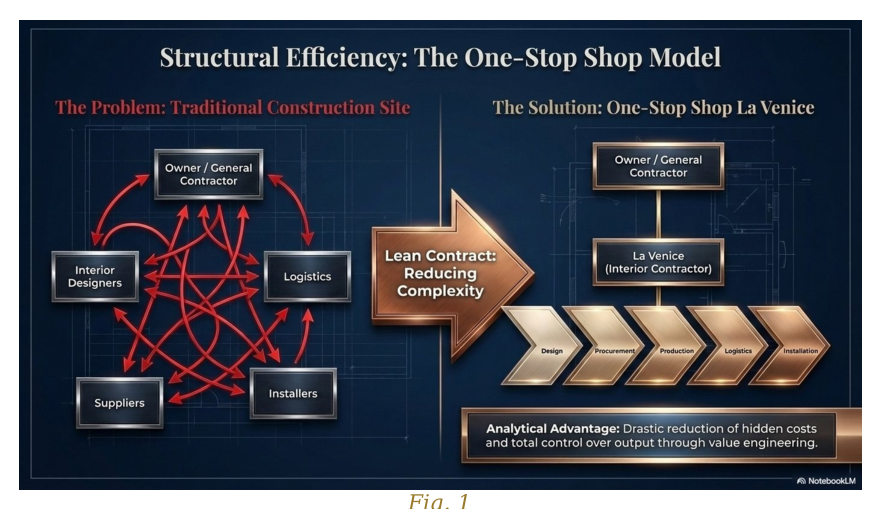
Figure 1 clarifies our position: LA Venice stays at the same level as the Interior Designer, at their side, even when the client is not the designer.
2. How we defend the project before the client, the Architect of Record and the GC
Every stakeholder can, without meaning to, shift the center of gravity. The Architect of Record has regulatory responsibilities that push toward conservative solutions; the General Contractor has schedule pressure; the client has the last economic word. The designer is the most exposed, because they carry the least measurable value before people who reason in time, cost and compliance.
Our role is to act as a protective interface. When the General Contractor asks for an acceleration that would compromise a fabrication, we do not pass the pressure to the designer: we absorb it, with an alternative sequence that holds schedule and quality together. When the Architect of Record raises a compliance doubt, we arrive with the documentation that lets the detail survive.
There is a rule we do not break: we never take the floor to correct the designer in front of the client. If something needs revising, the channel is private and upstream. In public, our function is to confirm that what the designer promised is buildable.
The same applies when it is the client who turns directly to us: we bring the conversation back where it belongs, keeping the designer informed and, where needed, present. The manufacturer who talks to the client behind the designer's back is the manufacturer that designer stops being able to trust.
3. How we translate the aesthetic intent into specifications without distorting it
A luxury project lives on details — a continuity of grain, a raking light on a lacquer, a reveal that disappears into the wall — and those details must be turned into verifiable specifications without getting lost along the way. The method is to keep the Design Intent always visible next to the technical specification. When feasibility and intent conflict, we bring the designer the conflict and at least one alternative that saves the intent.
Value engineering is where this respect is measured. We approach it the other way around, with a Lean Manufacturing logic: we first look for where to save without it showing — structures, unseen parts, processes — and we protect what carries the project's character. When a cut touches the aesthetics we say so, with cost and visual consequence explicit, and we leave the choice to the one who designed.
On substitutions the rule is the same: never our decision, always a proposal with documented equivalence — why the substitute holds the same performance, how it differs to the eye, what it entails in cost and time. A silent substitution is a theft of authorship that the designer sooner or later discovers.
A multi-family in San Francisco: 350 apartments, about ten layouts, the concept entrusted by the General Contractor to a California studio. The kitchen handles were the detail on which the designer had built the character of the space, and they carried a significant production cost. The manufacturer proposes a cheaper alternative to the GC, the GC accepts, the handles are purchased. No one brings the proposal to the designer. At inspection, during installation, it is clear the kitchen concept has collapsed: thousands of handles ending up in the trash, plus the time lost remaking them. No one had acted in bad faith. Just one step had been missing: bringing the substitution to the one who had designed.
4. What we leave and what we do not
In the result we want to be invisible: if a guest walks in and thinks "what a beautiful detail", that thought must go to the designer. Recognizable we want to be in the method — intent kept visible, conflicts brought upstream and in private, alternatives already prepared.
A supplier that at every project tries to leave its own mark builds a competitive relationship: every collaboration becomes a negotiation over who is in charge. An active partner builds the opposite, a trust that accumulates. The designer who has seen their vision defended once comes back with fewer controls and more mandate.
For the next project
If you are considering an Italian partner for a luxury project in the United States, the question that distinguishes a partner from a supplier is not which fabrications it can do. It is where it places itself: behind your vision, to make it buildable, or in front, to propose its own. Ask before you begin.
The project belongs to the designer. Our craft is to get it to the site intact — and to stay invisible in the result, recognizable only in the method.
Get New Insights via Email.
One article per month. No drip sequences. Unsubscribe in one click.